
MON - SAT: 09:30 - 06:00 PM
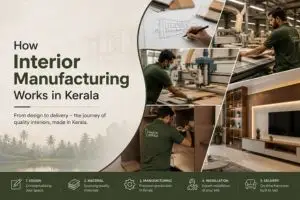
Interior spaces today are expected to do more than look attractive. Homes, offices, retail stores, and hospitality projects demand interiors that combine functionality, durability, aesthetics, and efficient space utilization. Behind every well-executed interior project lies a carefully planned manufacturing process that transforms design concepts into finished products ready for installation.
As demand for customized interiors continues to rise, the role of an Interior Design Manufacturing Company in Kerala has become increasingly significant. Modern interior manufacturing integrates advanced machinery, skilled craftsmanship, quality control systems, and project coordination to deliver precision-made interior solutions.
Kerala has emerged as a hub for quality interior production, supported by a growing ecosystem of manufacturing facilities, design professionals, and technology-driven production units. Companies such as Cypress Interiors have contributed to this evolution by emphasizing quality-focused manufacturing practices that help turn creative interior concepts into practical living and working environments.
Interior manufacturing is the process of producing various interior elements in a controlled factory environment before they are transported and installed at the project site.
These manufactured components may include:
Modular kitchens
Wardrobes
TV units
Office workstations
Reception counters
Storage systems
Wall paneling
Ceiling elements
Custom furniture
Display units
Unlike traditional on-site carpentry, interior manufacturing follows a systematic production process where designs are converted into factory-produced components with precise dimensions and finishes.
This approach improves consistency, reduces wastage, and allows better quality monitoring throughout the production cycle.
Interior manufacturing serves as the backbone of modern interior projects. Without a structured manufacturing process, maintaining consistency, timelines, and quality standards becomes challenging.
Factory-controlled production ensures accurate measurements and consistent output across all components.
Manufacturing and site preparation can happen simultaneously, reducing overall project timelines.
Dedicated inspection procedures help identify issues before products reach the site.
Technology-driven cutting and production methods optimize material usage.
Clients can choose designs, materials, colors, finishes, and configurations based on their requirements.
Machine-assisted production delivers uniform finishes across multiple units.
For homeowners and businesses, these advantages translate into efficient project execution and long-lasting interiors.
Successful interior manufacturing is a collaborative effort involving multiple professionals.
They develop layouts, concepts, material specifications, and visual presentations.
They translate design drawings into manufacturing-ready documents.
They ensure communication between designers, production teams, suppliers, and installation crews.
They operate CNC machines, edge banding equipment, cutting systems, and finishing tools.
They handle assembly, detailing, finishing, and custom fabrication requirements.
They inspect products throughout various production stages.
They transport and install manufactured components at project locations.
Each team plays a critical role in ensuring the final output aligns with design intent and client expectations.
Many people assume manufacturing starts only after design approval. In reality, preparation begins much earlier.
The manufacturing process typically starts after:
Client requirements are finalized
Site measurements are completed
Design concepts receive approval
Material selections are confirmed
Production drawings are prepared
Before actual fabrication begins, manufacturing teams conduct detailed planning sessions to avoid errors during production.
This planning stage often determines the success of the entire project.
Modern interior manufacturing primarily takes place in dedicated production facilities equipped with specialized machinery and workstations.
These facilities generally include:
Responsible for technical drawings and production documentation.
Used for storing plywood, MDF, laminates, veneers, hardware, and accessories.
Handles panel cutting using advanced CNC equipment.
Where individual components are assembled into finished products.
Dedicated to polishing, painting, laminating, and surface treatments.
Products undergo multiple quality checks before dispatch.
Prepared products are packed and scheduled for transportation.
Factory-based production enables greater control over quality, safety, and efficiency.
Understanding the complete production journey helps clients appreciate the level of coordination involved in modern interior projects.
Every successful project begins with understanding the client's needs.
This stage involves:
Lifestyle analysis
Space utilization planning
Budget discussions
Design preferences
Functional requirements
Detailed consultations help eliminate misunderstandings later in the project.
Once requirements are gathered, designers begin creating concepts and layouts.
Deliverables may include:
Floor plans
Furniture layouts
3D visualizations
Material proposals
Color schemes
The objective is to convert ideas into a practical design framework.
Material selection influences durability, appearance, maintenance requirements, and project cost.
Commonly used materials include:
Plywood
MDF
HDF boards
Laminates
Acrylic finishes
Veneers
Glass
Metal components
Hardware accessories
Experienced manufacturers carefully evaluate material performance before approval.
After design approval, technical teams create manufacturing drawings.
This stage includes:
Dimension verification
Production scheduling
Resource allocation
Material calculations
Machine programming
Detailed planning significantly reduces production errors.
This is where digital designs become physical components.
Modern factories use CNC machines for:
Precision panel cutting
Grooving
Drilling
Routing
Shaping
Benefits of CNC production include:
High accuracy
Reduced wastage
Faster production
Consistent quality
Advanced machinery has transformed how interior manufacturing is executed in Kerala.
Individual parts are assembled according to production drawings.
During assembly:
Components are matched
Hardware is fitted
Structural stability is checked
Alignment is verified
Quality inspectors evaluate products against approved specifications.
Inspection checkpoints often include:
Dimension accuracy
Hardware functionality
Surface finish quality
Structural integrity
The finishing stage determines the visual appeal of the final product.
Popular finishing options include:
Laminates
PU coatings
Acrylic finishes
Veneers
Paint finishes
Textured surfaces
Surface preparation and finishing require meticulous attention to detail.
Even minor imperfections can affect overall aesthetics.
Manufactured products must be protected during transportation.
Packaging procedures often include:
Protective wrapping
Corner guards
Labeling systems
Component identification
Transport scheduling
Proper packaging minimizes damage risks during transit.
Installation teams assemble manufactured components at the project site.
Installation activities include:
Positioning units
Level adjustments
Hardware installation
Joint finishing
Functional testing
A well-planned installation process ensures seamless integration with the project environment.
Before project completion, a final review is conducted.
This inspection typically verifies:
Design compliance
Functional performance
Finish quality
Client requirements
Safety considerations
Only after successful inspection is the project handed over to the client.
Technology has reshaped interior manufacturing over the last decade.
Modern production facilities increasingly rely on automation and digital tools to improve productivity and quality.
Computer-controlled cutting systems deliver highly accurate production results.
Automation minimizes manual errors while increasing efficiency.
Clients can visualize interiors before manufacturing begins.
Benefits include:
Faster approvals
Improved communication
Better design decisions
Modular production enables large portions of projects to be completed off-site.
Advantages include:
Faster installation
Reduced site disruptions
Better quality control
Digital project management tools help monitor:
Production schedules
Inventory levels
Resource allocation
Delivery timelines
Manufacturers are increasingly adopting:
Low-emission materials
Energy-efficient machinery
Waste reduction practices
Eco-friendly finishes
These technologies support environmentally responsible production practices.
The future of interior manufacturing in Kerala is closely linked to evolving consumer expectations and technological innovation.
Several trends are expected to shape the industry.
Clients increasingly seek personalized solutions tailored to their lifestyles and preferences.
Future interiors will incorporate:
Automated lighting
Smart storage solutions
Intelligent workspace designs
Integrated technology systems
Demand for environmentally responsible materials continues to grow.
Controlled manufacturing environments will become the preferred approach for delivering consistent quality.
Clients expect shorter timelines without compromising quality standards.
Manufacturers capable of balancing speed and precision will gain a competitive advantage.
Despite technological advancements, several challenges continue to impact the industry.
Supply chain disruptions can affect project schedules.
Late-stage modifications often increase costs and production complexity.
Maintaining uniform quality across large-scale projects requires rigorous monitoring.
Finding experienced technicians and craftsmen remains a challenge.
Effective collaboration between multiple teams is essential for project success.
Balancing quality expectations with budget constraints requires careful planning and execution.
Experienced manufacturers proactively address these challenges through structured processes and continuous improvement initiatives.
Selecting the right manufacturing partner can significantly influence project outcomes.
Consider the following factors before making a decision.
Look for companies with established production facilities and modern equipment.
Experienced manufacturers often have stronger systems and better problem-solving capabilities.
Companies investing in advanced production technologies generally offer greater precision and consistency.
Ask about material sourcing practices and quality certifications.
A strong portfolio provides insights into manufacturing expertise and project diversity.
Reliable manufacturers implement inspection processes at every production stage.
Manufacturing quality must be complemented by professional installation services.
Long-term support enhances customer confidence and project value.
A trustworthy Interior Design Manufacturing Company in Kerala should demonstrate transparency, technical expertise, and a commitment to delivering quality outcomes.
Interior manufacturing is the factory-based production of furniture, modular units, storage systems, wall panels, and other interior components that are later installed at project sites.
Factory-based manufacturing offers greater precision, faster execution, reduced wastage, and improved quality control compared to traditional on-site production methods.
Project timelines vary depending on size and complexity. Most residential interior manufacturing projects typically require several weeks from design approval to installation.
Modern facilities use CNC machinery, automated cutting systems, digital design software, 3D visualization tools, and smart production management platforms.
Look for manufacturing expertise, advanced technology, quality assurance processes, project experience, installation capabilities, and customer support services before making a decision.
Interior manufacturing is far more than cutting panels and assembling furniture. It is a carefully coordinated process involving design expertise, engineering precision, quality control, technology integration, and skilled execution. As Kerala's construction and interior sectors continue to evolve, factory-based manufacturing is becoming the preferred approach for delivering reliable, efficient, and high-quality interior solutions.
Organizations that invest in advanced manufacturing systems, skilled teams, and process-driven execution continue to raise industry standards. Companies such as Cypress Interiors contribute to this progress by helping transform design concepts into well-crafted interior environments that balance functionality, aesthetics, and long-term value for homeowners and businesses alike.