
MON - SAT: 09:30 - 06:00 PM
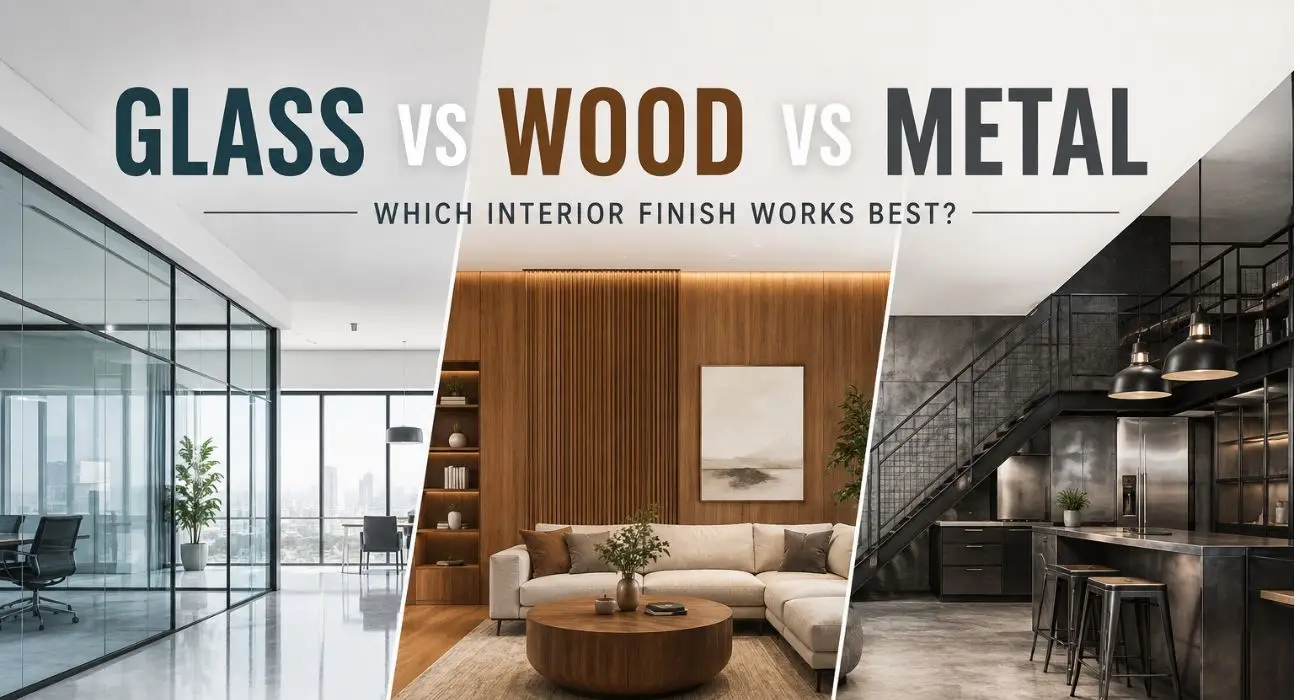
Durability is often the first concern when selecting an interior finish. While all three materials can offer long service life, their performance varies depending on usage, environment, and maintenance.
Metal generally delivers the highest durability in demanding environments. Wood offers longevity when properly treated, while glass maintains its appearance for years if protected from impact damage.
Metal resists wear, scratches, and structural stress.
Quality hardwood can remain attractive for decades.
Tempered glass provides excellent strength compared to standard glass.
Environmental exposure affects each material differently.
Professional manufacturing significantly improves lifespan.
The ideal choice depends on where the material will be installed and how frequently it will be used.
Wood has remained a preferred interior material for centuries because it creates warmth, comfort, and visual richness that few materials can replicate.
From modular kitchens and wardrobes to wall panels and custom furniture, wood integrates naturally into both traditional and contemporary interiors. Modern manufacturing technologies have also enhanced wood's resistance to moisture, termites, and wear.
Creates a welcoming and natural atmosphere.
Available in numerous textures and finishes.
Suitable for both residential and commercial projects.
Offers excellent customization possibilities.
Adds timeless aesthetic value to interiors.
Wood is particularly popular in Kerala because it complements the region's architectural heritage while adapting seamlessly to modern design concepts.
Modular kitchens
Bedroom wardrobes
Decorative wall cladding
TV units
Office furniture
Reception areas
When sourced and manufactured responsibly, wood remains one of the most versatile interior materials available.
Glass has become a defining feature of modern interior design due to its ability to enhance openness and maximize natural light.
In urban apartments and commercial offices, glass helps create the illusion of larger spaces without compromising functionality. Designers often use glass partitions, doors, railings, and decorative elements to achieve sleek and sophisticated interiors.
Improves natural light distribution.
Creates a spacious visual effect.
Complements modern architectural styles.
Available in clear, frosted, tinted, and textured variants.
Easy to clean and maintain.
Glass works especially well in compact spaces where visual openness is a priority.
Office partitions
Shower enclosures
Staircase railings
Kitchen backsplashes
Decorative wall panels
Conference room dividers
The growing demand for contemporary interiors has increased the use of advanced glass solutions across residential and commercial projects.
Metal is no longer limited to industrial settings. Today, it is a signature element in luxury homes, retail outlets, hospitality projects, and modern offices.
Architects and interior manufacturers frequently incorporate metal accents to create bold visual statements while enhancing structural reliability.
Exceptional durability.
Modern and sophisticated appearance.
Strong resistance to environmental wear.
Minimal maintenance requirements.
Excellent compatibility with glass and wood.
Metal finishes are available in numerous styles, including brushed, polished, matte, powder-coated, and textured surfaces.
Stainless steel
Aluminum
Brass
Copper
Mild steel
These materials contribute to elegant interiors while offering superior performance in high-traffic environments.
Maintenance requirements vary considerably between materials and can significantly influence long-term satisfaction.
Metal and glass typically require less maintenance than wood, although modern engineered wood products have improved considerably in recent years.
Glass
Simple cleaning process.
Does not absorb stains easily.
Retains appearance for extended periods.
Metal
Resistant to everyday wear.
Requires occasional polishing depending on finish.
Highly durable under heavy use.
Wood
May require periodic refinishing.
Sensitive to excessive moisture.
Needs protection from scratches and impact.
For homeowners seeking convenience, glass and metal often provide lower maintenance commitments over time.
Kerala's tropical climate presents unique challenges for interior materials. Humidity, temperature fluctuations, and seasonal rainfall can affect performance if materials are not properly selected and manufactured.
An experienced Interior Design Manufacturing Company in Kerala understands these environmental factors and chooses materials accordingly.
Modern treated wood performs well when protected against moisture and pests.
Benefits include:
Natural insulation properties.
Attractive visual appeal.
Strong customization potential.
Glass remains largely unaffected by humidity and performs consistently throughout the year.
Advantages include:
Weather-resistant properties.
Long-lasting appearance.
Easy maintenance.
Corrosion-resistant metals such as stainless steel and aluminum perform exceptionally well.
Benefits include:
Moisture resistance.
Structural reliability.
Long operational lifespan.
Material selection should always consider the specific location and usage requirements of the project.
The most cost-effective material is not always the one with the lowest initial price. Long-term value depends on durability, maintenance expenses, replacement frequency, and aesthetic longevity.
Timeless appeal.
Customization flexibility.
Strong resale perception.
Contemporary aesthetics.
Improved natural lighting.
Minimal maintenance costs.
Exceptional durability.
Long replacement cycles.
High performance in demanding environments.
Many successful interior projects combine all three materials to maximize functionality and visual impact.
Absolutely. Some of the most impressive interiors achieve balance by combining glass, wood, and metal strategically.
Rather than selecting a single material, modern design often embraces material integration to create visually dynamic and highly functional spaces.
Warm and elegant appearance.
Ideal for homes and apartments.
Enhances natural lighting.
Modern and professional aesthetic.
Frequently used in offices and commercial projects.
Creates a premium visual identity.
Combines warmth with strength.
Suitable for contemporary interiors.
Popular in luxury residential projects.
Balanced blend of aesthetics and performance.
Suitable for high-end custom interiors.
Supports diverse design styles.
Professional manufacturing ensures seamless integration of these materials for a cohesive final result.
Before making a decision, homeowners should evaluate practical requirements alongside design preferences.
Purpose of the space.
Expected usage levels.
Maintenance expectations.
Budget allocation.
Climate conditions.
Design style preferences.
Safety requirements.
Long-term durability goals.
Choosing materials solely based on appearance.
Ignoring environmental conditions.
Overlooking maintenance requirements.
Selecting low-quality manufacturing solutions.
Failing to consider future lifestyle changes.
Careful planning helps ensure that interior investments continue delivering value for many years.
Interior manufacturing specialists often recommend evaluating materials beyond their visual appeal.
Prioritize functionality before aesthetics.
Select certified and quality-tested materials.
Consider future maintenance costs.
Match finishes with room-specific requirements.
Invest in professional manufacturing and installation.
Focus on long-term performance rather than short-term trends.
These strategies help create interiors that remain attractive, durable, and practical over time.
The debate between glass, wood, and metal does not have a universal winner because each material serves different purposes. Wood delivers warmth and timeless elegance, glass enhances openness and modernity, while metal offers unmatched durability and contemporary sophistication.
The best interior finish depends on your lifestyle, design goals, maintenance expectations, and environmental conditions. In many cases, combining these materials creates the most balanced and visually appealing outcome.
As Kerala's interior industry continues embracing advanced manufacturing technologies and customized design solutions, experienced companies such as Cypress Interiors contribute significantly to transforming design concepts into functional living and working environments. Before finalizing any interior finish, consulting knowledgeable manufacturing professionals can help ensure that your investment delivers beauty, performance, and long-term value for years to come.