
MON - SAT: 09:30 - 06:00 PM
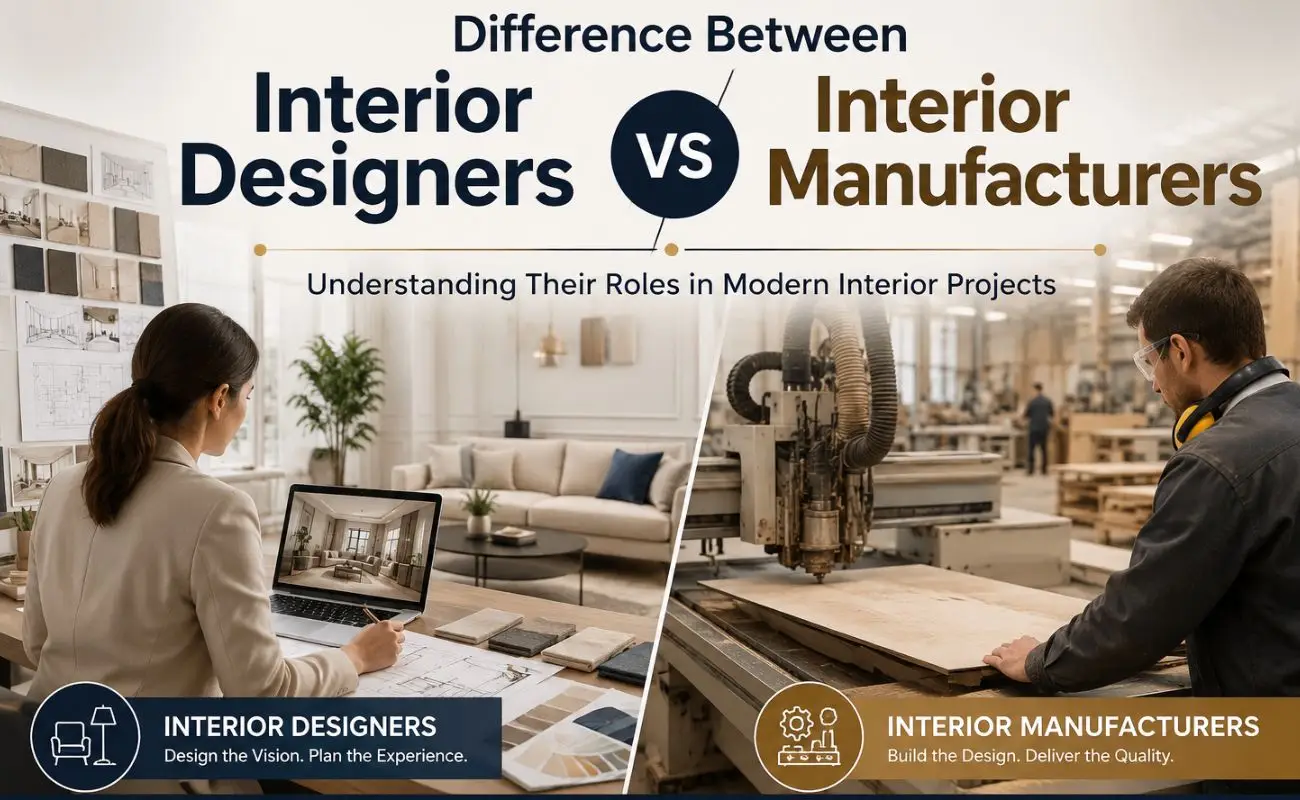
When planning a home, office, retail outlet, or commercial space, many people assume that interior designers and interior manufacturers perform the same function. While both contribute to creating beautiful and functional interiors, their responsibilities, expertise, and project involvement differ significantly.
Understanding these differences can help property owners make informed decisions, avoid costly mistakes, and achieve better project outcomes. In today's competitive market, choosing the right Interior Design Manufacturing Company in Kerala often depends on understanding where design ends and manufacturing begins.
Kerala's interior industry has evolved considerably over the years, with companies increasingly integrating design expertise and manufacturing capabilities under one roof. This approach helps streamline projects, maintain quality standards, and deliver customized interior solutions that meet modern lifestyle demands.
An interior designer is a professional who plans, conceptualizes, and designs interior spaces to improve their functionality, aesthetics, comfort, and efficiency.
The primary responsibility of an interior designer is to transform a client's ideas, requirements, and preferences into a practical design concept. Designers focus on creating spaces that are visually appealing while ensuring they serve their intended purpose effectively.
Whether it's a modern apartment, luxury villa, corporate office, or retail showroom, interior designers analyze the available space and develop solutions that enhance both appearance and usability.
Interior designers contribute to various stages of project planning and development, including:
Space planning and layout design
Concept development
Material and finish selection
Furniture planning
Color consultation
Lighting design
Ceiling and flooring recommendations
Storage optimization
Interior styling
Project coordination
These services ensure that every element within a space works together cohesively to achieve the desired outcome.
Successful interior designers possess a combination of creative, technical, and communication skills.
Key competencies include:
Designers must visualize spaces and develop innovative solutions tailored to individual client requirements.
Understanding construction methods, materials, ergonomics, and building regulations is essential.
Modern designers rely on advanced tools such as:
AutoCAD
SketchUp
Revit
3D Max
Lumion
These platforms help create accurate plans and realistic visualizations.
Interior designers collaborate with clients, contractors, suppliers, and manufacturers throughout a project.
Managing timelines, budgets, and resources is crucial for delivering successful interior projects.
An interior manufacturer is responsible for producing the physical components specified in interior designs. Their role focuses on transforming design concepts into tangible products that become part of the finished space.
Unlike designers who create plans and visual concepts, manufacturers operate production facilities equipped with machinery, tools, and skilled craftsmen who fabricate furniture, cabinetry, wardrobes, partitions, and other customized interior elements.
A professional Interior Design Manufacturing Company in Kerala combines advanced manufacturing processes with quality control systems to ensure the precise execution of design requirements.
Interior manufacturers typically provide:
Producing customized kitchen cabinets, shutters, countertops, and storage units.
Creating built-in wardrobes tailored to room dimensions and client preferences.
Manufacturing unique furniture pieces according to approved designs.
Using precision machinery for accurate cutting, drilling, and shaping.
Handling plywood, MDF, laminates, veneers, acrylics, and other interior materials.
Producing partitions, wall panels, display units, and commercial furnishings.
Ensuring manufactured products are properly installed on-site.
Although designers and manufacturers work toward a common goal, their responsibilities differ significantly.
Interior designers focus on planning and visualization. They determine how spaces should look, function, and feel.
Interior manufacturers focus on production and execution. They ensure approved designs are accurately fabricated using suitable materials and manufacturing processes.
A designer may specify a custom wardrobe design, but the manufacturer determines how it will be produced, assembled, and installed.
In simple terms:
Designers create the vision.
Manufacturers bring the vision to life.
Both are equally important for achieving successful interior outcomes.
An interior designer develops concepts that enhance functionality and aesthetics.
An interior manufacturer produces the physical components required to implement those concepts.
Designers focus on planning, creativity, and user experience.
Manufacturers focus on fabrication, quality control, and production efficiency.
Designers rely heavily on creativity, visualization, and technical design expertise.
Manufacturers require engineering knowledge, production planning skills, machinery operation expertise, and craftsmanship.
Interior designers commonly use:
CAD software
Rendering tools
Design applications
Interior manufacturers use:
CNC machines
Edge banding machines
Panel saws
Production equipment
Quality testing tools
Designers provide:
Layout plans
Design concepts
3D visualizations
Material specifications
Manufacturers provide:
Finished furniture
Cabinets
Modular systems
Interior components
Designers engage extensively with clients during planning stages.
Manufacturers primarily interact during production approvals and installation.
Design costs generally involve planning and consultation fees.
Manufacturing costs depend on materials, production methods, customization levels, and installation requirements.
Designers establish project concepts and specifications early in the project.
Manufacturers become heavily involved during the production and implementation phases.
Hiring an interior designer is beneficial when a project requires professional planning and creative direction.
Ideal situations include:
Building a new home
Renovating an existing property
Designing luxury residences
Upgrading office interiors
Improving retail environments
Optimizing compact spaces
A designer helps avoid costly planning mistakes while ensuring the final space aligns with the client's lifestyle and objectives.
Working with an experienced designer offers several advantages:
Better space utilization
Improved functionality
Professional design expertise
Cohesive visual appearance
Enhanced property value
Access to industry resources
Efficient project planning
Reduced design errors
Improved lighting and ergonomics
Personalized solutions
For example, a designer may identify storage opportunities that homeowners would otherwise overlook, resulting in a cleaner and more organized living environment.
An interior manufacturer becomes essential when a project requires custom-built products or large-scale interior production.
You should consider working with an interior manufacturer if you need:
Modular kitchens
Customized wardrobes
Built-in storage systems
Office furniture
Retail display units
Hotel furnishings
Commercial fit-out products
Bulk furniture production
Manufacturers ensure that designs are translated into durable, high-quality products that meet project specifications.
Partnering with a professional manufacturer offers multiple benefits:
Consistent product quality
Precision production
Better customization options
Faster fabrication timelines
Efficient material utilization
Scalable production capabilities
Improved quality control
Long-term durability
Professional installation support
Cost-effective bulk production
A reliable manufacturer can also suggest practical improvements that enhance functionality without compromising the design intent.
Many property owners encounter challenges because they misunderstand the roles of designers and manufacturers.
Avoid these common mistakes:
Lower pricing may compromise design quality, materials, or workmanship.
Beautiful designs can fail if manufacturing limitations are overlooked.
Always evaluate portfolios, completed projects, and customer feedback.
The quality of materials directly impacts durability and appearance.
Clearly understand whether you require design services, manufacturing services, or both.
Rushed projects often lead to installation issues and long-term maintenance concerns.
The interior industry continues to evolve through technology, sustainability, and innovation.
Automation is improving accuracy, efficiency, and production speed.
Advanced machinery enables highly customized and detailed fabrication.
Demand for eco-friendly materials continues to grow across residential and commercial sectors.
Customers increasingly seek tailor-made furniture and customized interior solutions.
Virtual walkthroughs and 3D renderings help clients make informed decisions before production begins.
Closer collaboration between design and production teams improves project efficiency.
Kerala is witnessing increasing demand for premium residential and commercial interiors, encouraging manufacturers and designers to adopt advanced technologies and streamlined workflows.
One of the most significant developments in the industry is the integration of design and manufacturing services.
When designers and manufacturers work closely together, projects benefit in several ways.
Design specifications are monitored throughout production, reducing errors.
Communication gaps are minimized, resulting in quicker decision-making and execution.
Early coordination prevents expensive design modifications during manufacturing.
Integrated teams can develop unique solutions tailored to client requirements.
Every stage of the project follows a unified quality benchmark.
Clients enjoy smoother project management and fewer coordination challenges.
This integrated approach is becoming increasingly popular among homeowners and businesses seeking reliable interior solutions.
An interior designer creates concepts and plans, while an interior manufacturer produces the furniture and interior components required to implement those plans.
Some companies offer both design and manufacturing services, creating a seamless project experience from concept to completion.
For customized projects, both professionals often play important roles in achieving the best results.
Both are equally important. Great design requires quality manufacturing, and quality manufacturing depends on well-planned design.
Look for experience, manufacturing capabilities, completed projects, quality standards, customization options, customer reviews, and integrated service offerings.
Understanding the difference between interior designers and interior manufacturers is essential for making informed project decisions. Designers focus on planning, creativity, and functionality, while manufacturers transform those concepts into high-quality physical products.
The most successful interior projects often result from strong collaboration between both disciplines. As the industry continues to evolve, integrated solutions are becoming increasingly valuable for homeowners and businesses seeking efficiency, customization, and superior quality.
Companies such as Cypress Interiors reflect this growing trend within Kerala's interior sector by recognizing the importance of combining thoughtful design practices with reliable manufacturing capabilities. This integrated approach helps deliver interior environments that are not only visually appealing but also practical, durable, and tailored to modern living requirements.